
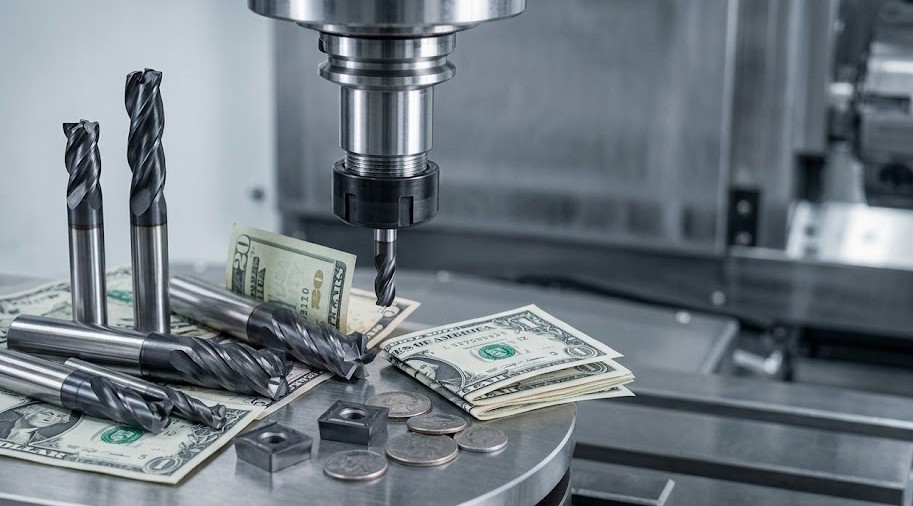
If you’ve noticed the price of carbide tooling creeping (or surging) upward over the past few years, you’re not imagining it. Here’s what’s happening and what you can do to protect your shop.
1. Why Is Carbide Getting More Expensive?
The short answer: one country controls most of the world’s tungsten, and they’ve been tightening the tap.
Tungsten is the raw ingredient in tungsten carbide. China controls over 80% of global tungsten mining output and more than half of known reserves. The next largest producers — Vietnam and Russia — together account for less than 10% of global supply. The U.S. has had no domestic tungsten mining since 2015.
Starting in 2023 and accelerating sharply in 2025, China began restricting tungsten exports through licensing requirements, reduced mining quotas, and — as of early 2026 — limiting overseas tungsten sales to just 15 approved companies. The result has been dramatic: tungsten prices surged over 200% in 2025 alone, with benchmark APT (ammonium paratungstate) prices up nearly 900% over 12 months in some markets, according to Fastmarkets.
On top of that, the U.S. government added a 25% Section 301 tariff on Chinese tungsten imports, effective January 1, 2025 — meaning American buyers are getting hit from both ends.
This isn’t a temporary blip from a supply chain hiccup. It’s a deliberate industrial policy by China to keep higher-value carbide manufacturing at home rather than export raw materials cheaply. As one tungsten trader put it: “Tungsten has become too political — it was always to some extent, but now it has been weaponised.”
Further reading: USGS 2025 Tungsten Mineral Commodity Summary | China Export Restriction Analysis — Quest Metals
2. Will Carbide Prices Drop?
Probably not soon. New mining projects are being fast-tracked in South Korea, Australia, Canada, and Portugal, but analysts estimate it will be 3–5 years before meaningful non-Chinese supply can enter the market at scale. China’s export controls are expected to remain in place through at least 2026–2027, and the geopolitical dynamics driving them aren’t going away.
The honest answer: plan for elevated carbide prices to be the new normal for the foreseeable future. The shops that adapt now will have a real competitive advantage.
3. How Can I Reduce Tool Usage?
Getting more life out of every tool you buy is the most direct way to offset higher carbide costs. Most shops have more room for improvement here than they realize.
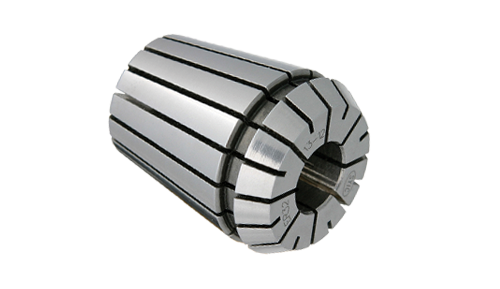 Check your collets. Worn collets cause runout, vibration, and uneven cutting loads — all of which shorten tool life dramatically. If you can’t remember the last time you replaced them, it’s probably time. Browse collets at Simplified Tool
Inspect your toolholders. A damaged or worn toolholder passes vibration and runout directly to your cutting tool. Inspect the taper, the face, and the retention knob regularly — and replace holders that are out of spec. We carry many lines of toolholders so if you don’t see what you need please contact us. Toolholders at Simplified Tool
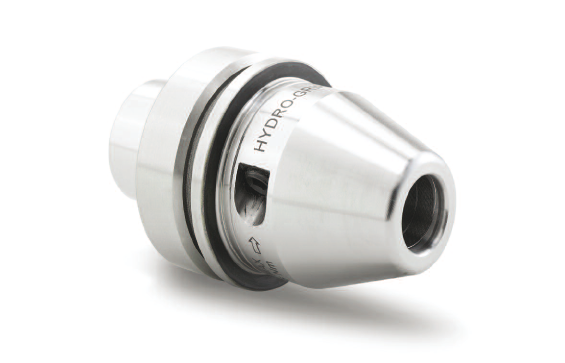 Upgrade to hydraulic toolholders. ETP hydraulic toolholders offer significantly better clamping force and dramatically reduced runout compared to standard ER collet chucks. Less runout = less chatter = longer tool life. It’s one of the best investments a shop can make when carbide is expensive. ETP Hydraulic Holders at Simplified Tool
Dial in your feeds and speeds. Running a tool too slow causes rubbing and heat buildup; too fast causes premature edge failure. Either way, you’re burning through carbide unnecessarily. Use the Simplified Tool Feeds & Speeds Calculator to make sure you’re in the right range.
Optimize dust and chip collection. Heat is the enemy of carbide. Proper chip/dust evacuation pulls heat away from the cutting zone and keeps tools running cooler and longer. If your dust collection isn’t keeping up, your tools are paying the price.
Recondition and resharpen don’t replace. A quality reconditioning service can restore a worn end mill or drill to near-new performance at a fraction of the cost of a new tool. Ask us about sharpening and reconditioning services
Consider Moving Processes to Diamond (PCD)Tooling. Diamond tooling can offer longer runtimes without sacrificing cut quality. Tungsten carbide is a component in Diamond (PCD) but the longer runtimes of properly designed diamond tooling will save you money. Contact us to today about Diamond questions or request a custom tool quote.
4. How Can I Recover Value From Carbide Scrap?
Every worn-out end mill, insert, and drill in your scrap bin has real value — because even spent carbide contains the tungsten that the rest of the world is scrambling to secure.
Carbide recycling matters for two reasons:
- Environmental: Recycling tungsten carbide requires far less energy than mining and processing virgin ore, and helps reduce dependence on environmentally intensive extraction.
- Financial: Scrap carbide prices have been rising along with raw tungsten prices. Many shops are leaving money on the table by not knowing the current market value of their scrap — or by defaulting to whatever price a local buyer offers without shopping it.
We may be able to help you get a better price for your carbide scrap. Contact us at Simplified Tool to talk through your scrap volume and see what options are available. It’s worth a conversation — especially in a market where carbide is worth more than ever.
Have questions about tooling, scrap recovery, or how to stretch your carbide budget further? Reach out to the team at Simplified Tool.